Terrazzo

Mistery Terrazzo

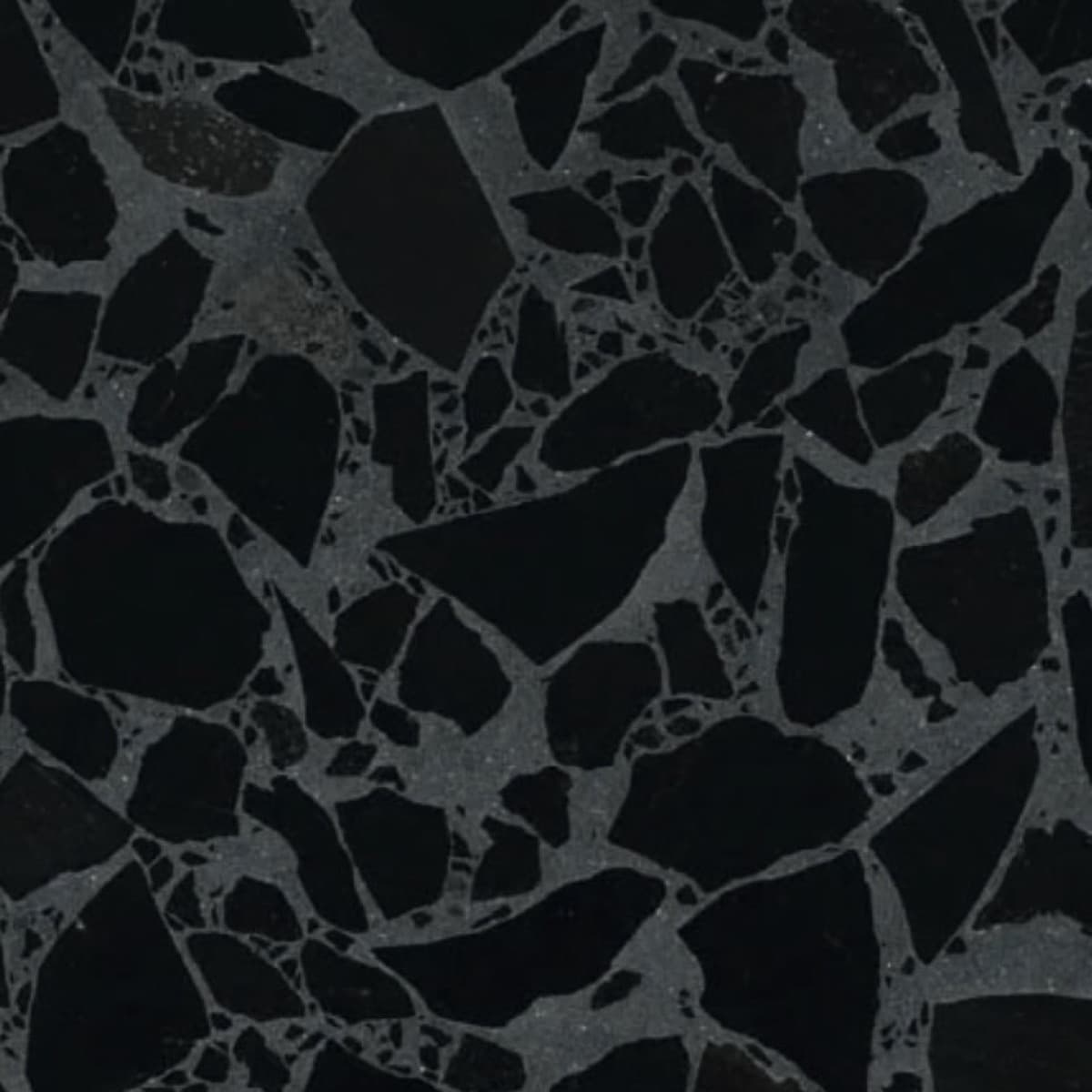
Mistery terrazzo — a tone-on-tone composite of black and charcoal chips. Subtle, moody and hard-wearing for tables and counters.

Colour
Charcoal and Black
Finish
Polished or honed
Mistery Terrazzo — Lebanto swatch
Mistery TerrazzoSwatch · Lebanto

01

The story of Mistery Terrazzo

Mistery is a terrazzo that keeps its pattern in the shadows: black and charcoal chips in a dark binder, only readable up close. It is a surface with depth and a very quiet confidence.

Terrazzo is stone made twice. The chips are the remains of other marbles, collected and set in a binder, then ground until the surface is flat and the pattern appears. Aggregate size and binder colour define its personality, from fine and quiet to bold and graphic.

Polished or honed; the size and colour of the aggregate define the personality of each slab, and the binder sets the mood.

It is a surface designed to be lived on. The pattern conceals crumbs and rings; the dense body shrugs off knocks; and over the years it can be re-polished to look new again.

When to choose itChoose Mistery Terrazzo when you want one piece to hold the room — a point of gravity the eye returns to.

02

Colour, mood and the way a room feels

Mistery Terrazzo reads as charcoal and black. Colour does quiet work in a home — here is how the tone behaves, seen through two long traditions of looking at it.

Colour psychology

The psychology of black

Black is the colour of depth and authority. It frames and concentrates: a black surface becomes the quiet centre of a room and makes the colours around it look richer. Psychologically it conveys sophistication, confidence and containment, and in small doses it grounds an interior the way a dark outline grounds a drawing.

The grey tones add depth and calm, letting the terrazzo feel quiet rather than loud.
Feng shui

Water energy

  • ElementWater
  • DirectionNorth

Black is the colour of the Water element — depth, wisdom and flow — and is associated with the north of a home and with life path and career. Feng shui advises balance: black grounds and protects, but a room that is mostly black can feel heavy, so soften it with wood, light textiles and warm light.

Mistery Terrazzo also carries grey notes, which bring a touch of Metal — clarity and refinement. As a rule of thumb, let the dominant colour decide where the piece belongs in the room and let the secondary tone support it.

03

Where Mistery Terrazzo lives best

  • Dining room

    Best fit

    Candlelight on polished black terrazzo is unmatched — a table or tray that makes an evening feel like an occasion.

  • Entryway

    Best fit

    A black console or tray makes a confident first impression and anchors a bright hall.

  • Study & library

    Best fit

    Concentrating and serious; black terrazzo surfaces suit a room built for thinking.

  • Powder room

    Also works

    Intimate and dramatic — the small room where black can be fully indulged.

  • Living room

    Also works

    A single black piece becomes the gravity of the seating area; it rewards restraint.

  • Bathroom

    Also works

    A composed, hotel-like palette — grey honed terrazzo is forgiving of water marks.

  • Bedroom

    With care

    Use black as an accent — a lamp base, a tray — rather than the dominant surface; a large dark mass can feel heavy beside a bed.

04

Using, pairing and caring for it

Best used for

  • Table tops and side tables
  • Lamps and sculptural objects
  • Trays, bowls and bookends
  • Counter and vanity surfaces

Pairs with

  • pale oak
  • white plaster
  • brushed brass
  • linen

Care

Wipe with mild soap and water; avoid harsh acids; re-seal occasionally.

Aggregate
Tone-on-tone black and charcoal chips
Best in
Dining room, Entryway and Study & library

05

The swatch

This is the maker’s own swatch. Slab, veneer and finish batch vary, so treat it as a reference rather than a promise.

  • Mistery Terrazzo — Lebanto swatch

    Maker

    Lebanto

    Official swatch

The finish board

Want to see Mistery Terrazzo in person, or in a piece?