Designer · Velm, Belgium
JamesVan Vossel
A Belgian designer who thinks with his hands. For Deknudt he drew a mirror in two parts, so the person looking can turn it.
“I manipulate material. That’s how I think. The material is my drawing.”
James Van Vossel, his approach page at jamesvanvossel.com
Draws for Deknudt Mirrors
Try it. Linea’s two discs turn on their own.
A sketch of the idea, not the mirror.
The path
From the sketchbook to the bench.
He studied interior architecture and architecture, then furniture design. He graduated with distinction at Thomas More University in Mechelen.

- 2002–03
Breakdancer
His Breakdancer chair wins Exit 2002 in Ghent, and the Interior Innovation Award in Cologne a year later.
- 2006
JAMES
He founds his own studio and label, JAMES.
- 2008–09
Z-Ball, then the oeuvre
Z-Ball wins an award at the Interieur biennale in Courtrai. In 2009 his body of work wins the Young Professional for Europe Award in Verona.
- 2009
Fox & Freeze
He starts a creative cooperation with Tom De Vrieze. Their FF1 is a chair from one sheet of synthetic felt with no waste. It is nominated for a Henry van de Velde ecodesign award in 2010.
- 2010
A sledge in Milan
At the Milan fair he shows a child’s sledge of glued layers. That is how he first meets Thonet.
- 2013
JAMES 9
The Silver V.Award. His own site says Hong Kong and Ligne Roset files it under China, so we name only the prize.
- 2016
Side table 1025
He designs it for Thonet. By his own account he is the only Belgian furniture designer the house has invited. A Dutch profile tells of him carrying a dismantled prototype to their stand at IMM Cologne in a backpack.
- 2019
Double Face
He wins Spiegeltijd in Malines, a competition about mirrors. Six years later he is drawing for a mirror maker.
- 2020
Hollow
The iF Design Award in Berlin. The same piece is a finalist for the Architizer A+ Awards in New York.
The prizes are as he lists them himself. We have not checked them with the awarding bodies.
The bench
Hands first.
“I can’t sit on a drawing!”
James Van Vossel, as quoted by Ligne Roset and Thonet in their profiles of him
His own site says he “works by transferring his sketchbook directly into his workplace, through material intervention towards solutions.” He is not a paper designer. He is a researcher who works with his hands.
Deknudt describes a designer “driven by a desire to redefine archetypes, constantly searching, questioning”. Ligne Roset says the same, that he wants to reform archetypes rather than put another object on the market.
The atelier in Velm
His studio is by appointment. A small microshop sits in the atelier window with one product on display, visible day and night.
Who he draws for
Thonet, Ligne Roset, Montis, Jongform, Blitsdesign, Modular Lighting Instruments, Theo eyewear, Deknudt Mirrors, and more. In 2025 he started a label of his own, Pièce Ludique.
Why Deknudt
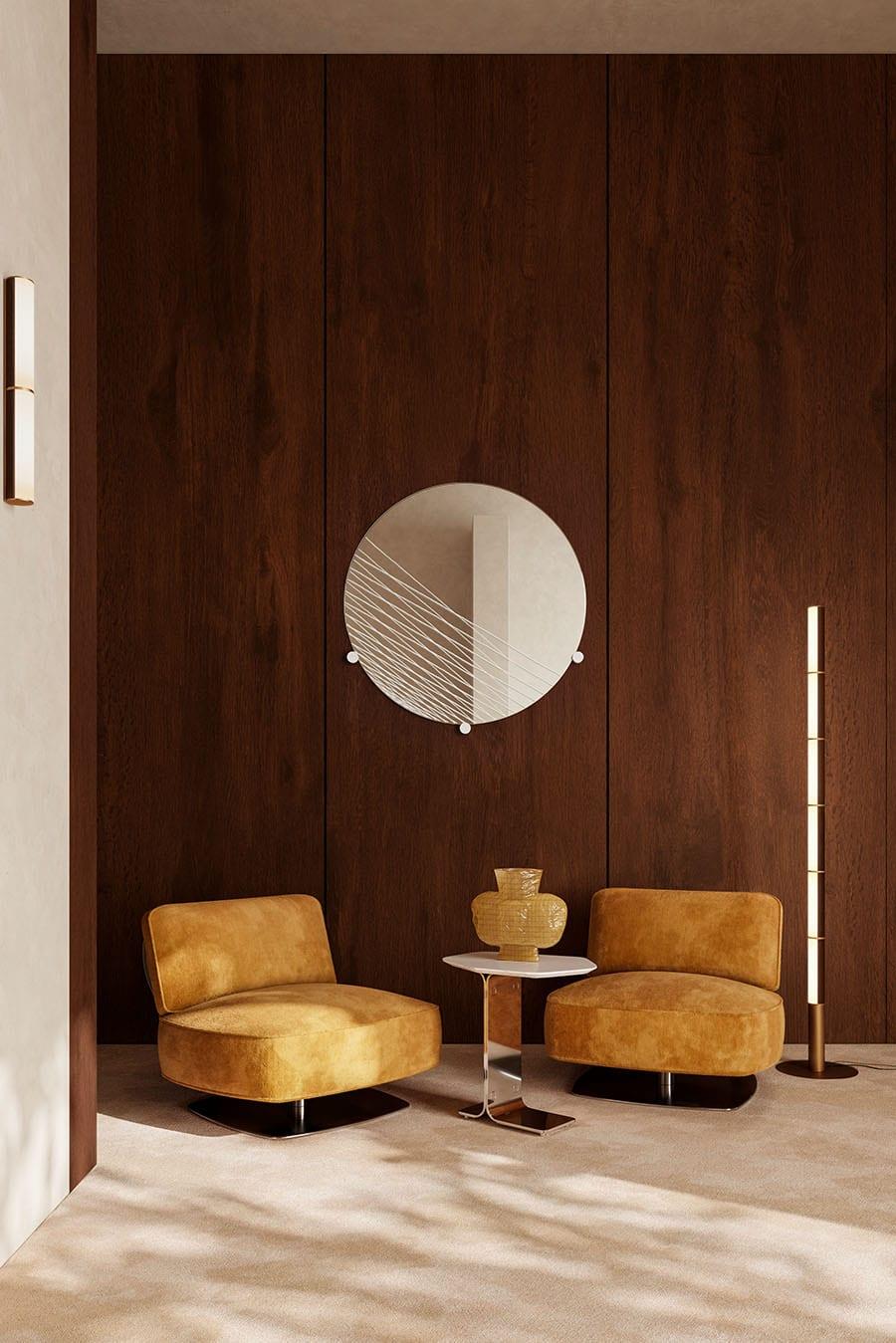
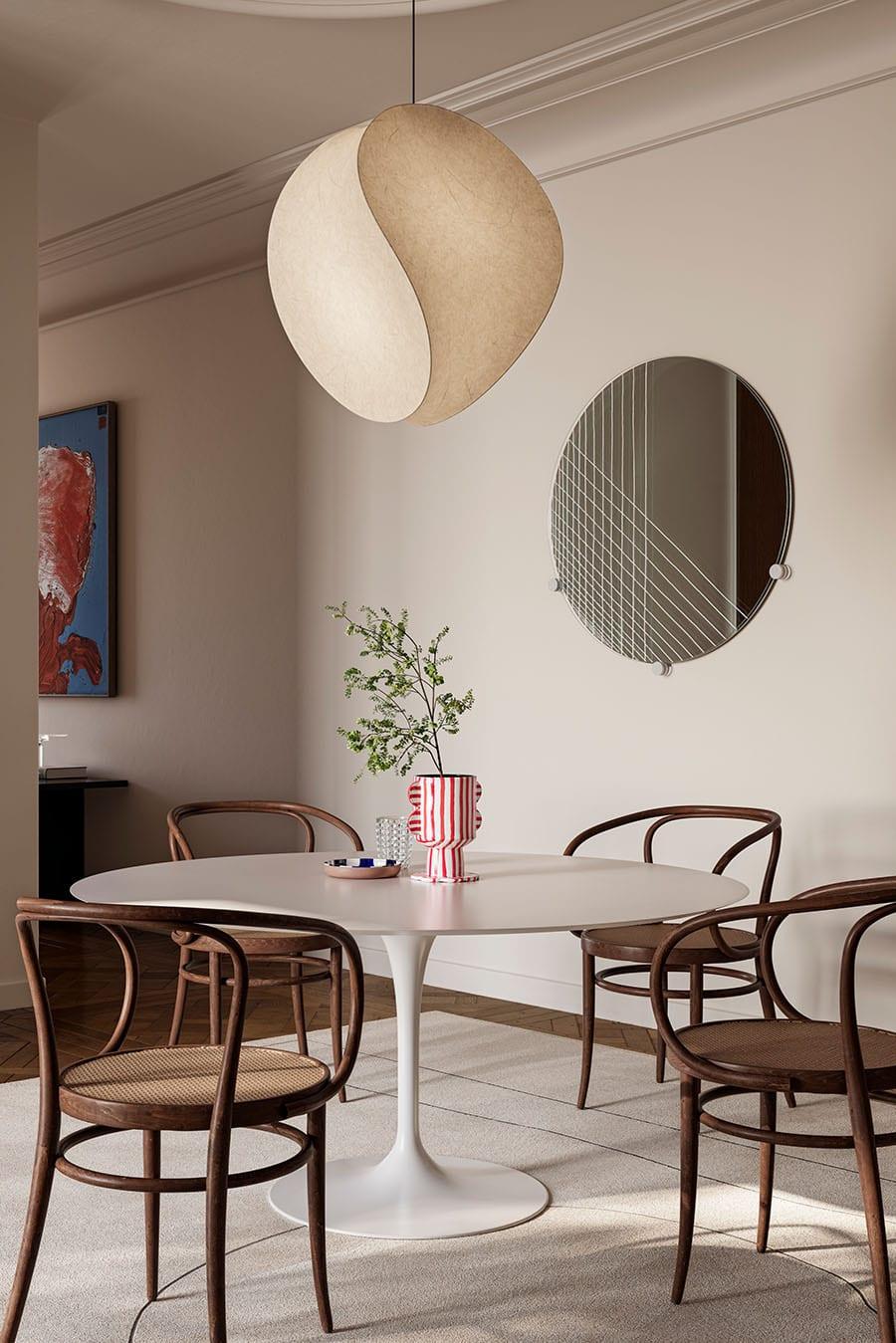
Two discs on three pegs.
Deknudt’s first pieces from him are Attitude, in 2025, and Linea, in 2026. Anything older we could not find. He is an outside designer, not on the staff.
- 1
Divide the mirror
His own site says Linea starts from his fascination with the elusive nature of a mirror. Deknudt writes that by dividing it into two plates, he invites the user to be part of that experience.
- 2
Print the lines
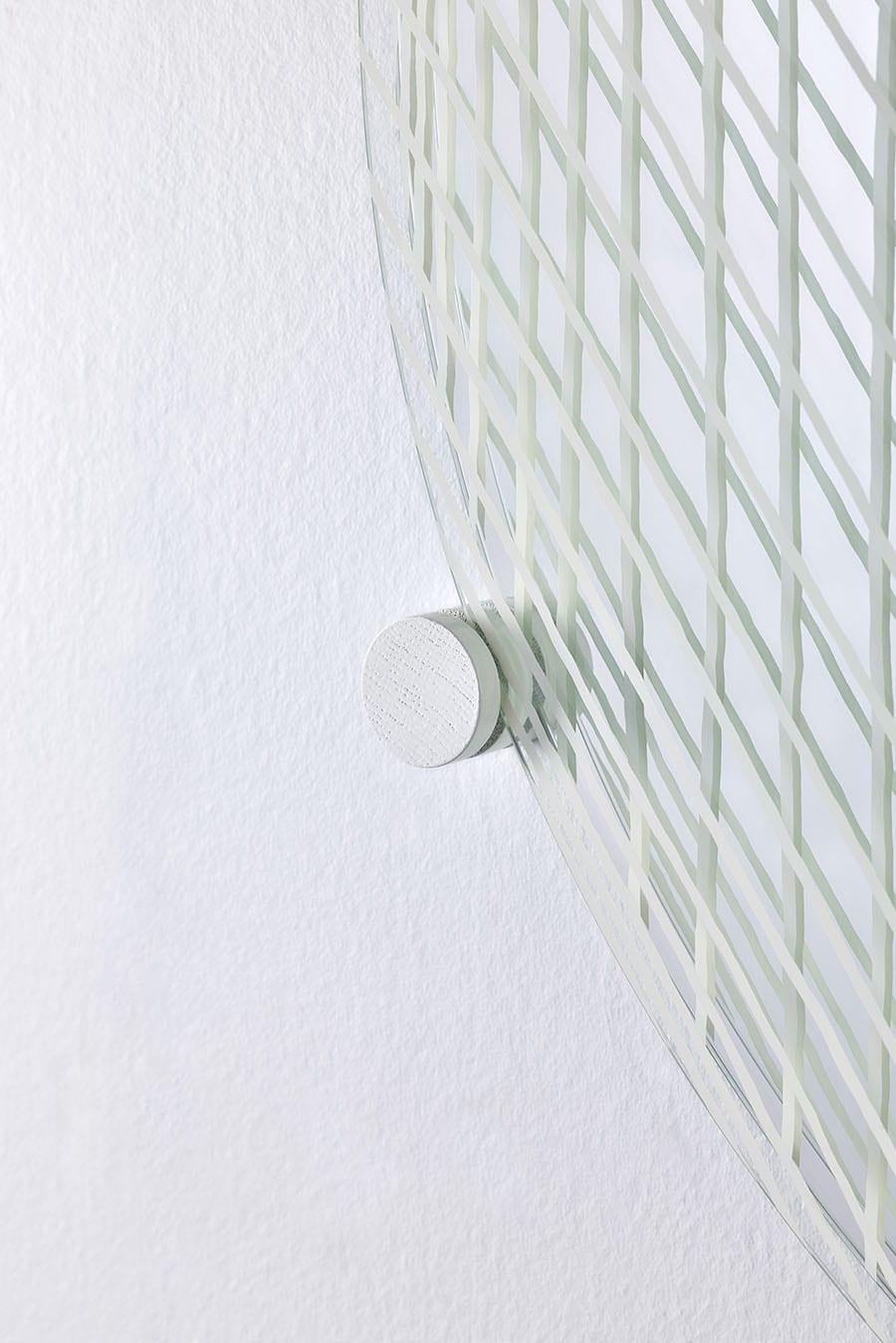
Both discs carry wavy lines, screen printed so that they look hand-painted, across part of the glass. The front disc is transparent. The one behind is mirrored.
- 3
Let each turn
The discs sit on three white oak pegs and turn independently, in place. As one moves, the lines make new patterns. “Like ripples spreading across a pond,” Deknudt writes.
“This is the distinctive signature of Linea,” Deknudt writes: the interplay that lets you make the mirror your own.
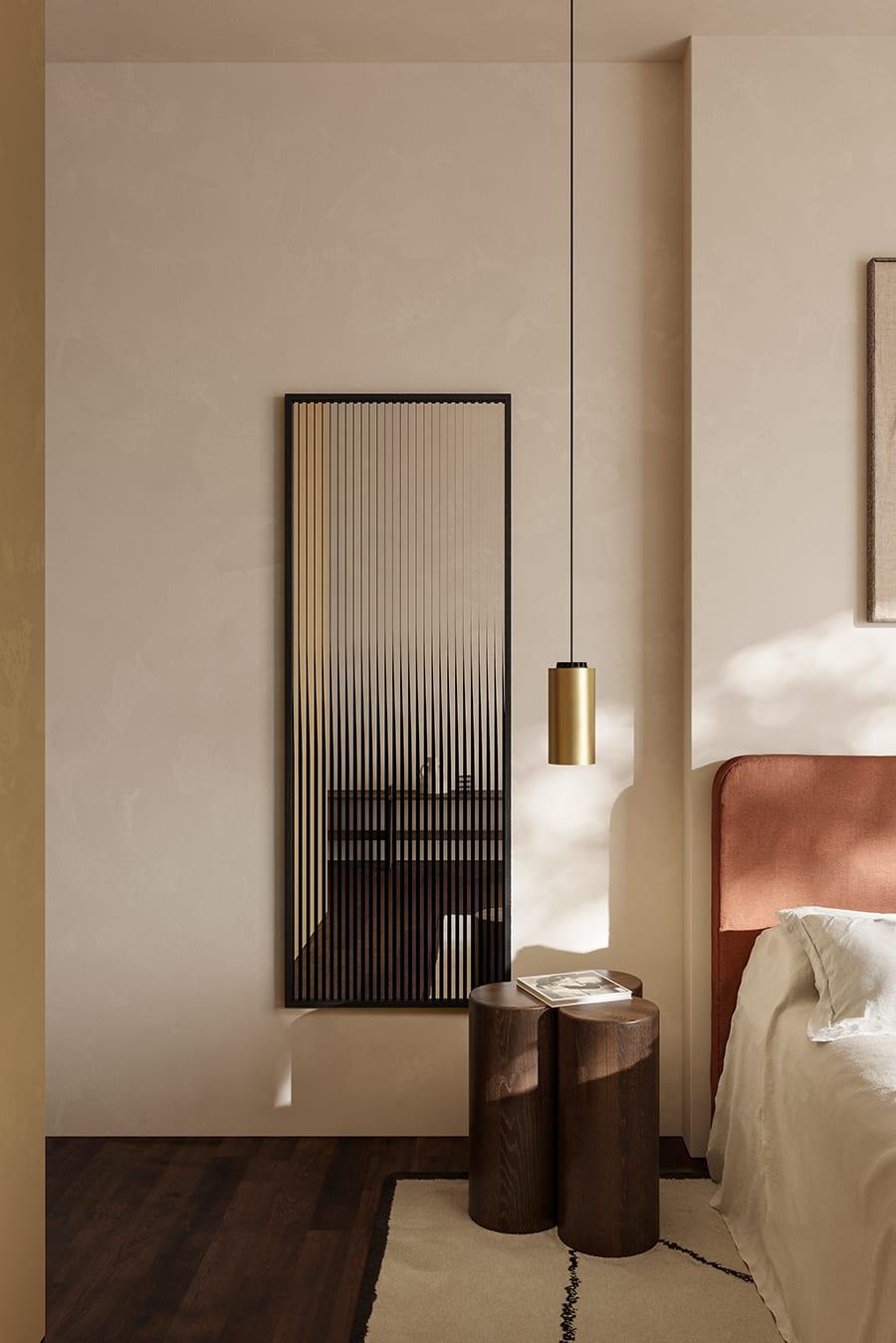
Attitude, 2025
The first of the two. Clear, reflective and black printed vertical strips are matched in two mirrors, in a frame of black solid oak. From the front you see only the mirror. As you walk past, the strips seem to shift. MELI does not carry it.
He also sells both mirrors from his own site, by email request. jamesvanvossel.com
What he stands for here
The researcher in the house.
Our reading, from the sources above. Deknudt is a house of mirror makers. James brings an object-maker’s habit: change one thing about the material, and see what the person looking can do.
- 01
Known materials
What is it made of, all the way through?
Linea names what it is: printed and mirrored glass, on white solid oak pegs. 100 cm across and 4.5 cm deep, about 18 kg.
- 03
Lived with
Does it work for all of us, at the hour we use it?
A mirror the whole family can change by hand. Each disc turns on its own, so the reflection sits a little differently from one day to the next. It is bathroom proof.
Two of five questions from the MELI Living Standard™.
 Linea, 100 cm
 Turning a discIn MELI ShopLinea.Two discs on oak pegs, 100 cm. The front disc is clear, the one behind is mirrored, and each turns on its own.See Linea