Lebanto credits him by name on two mirrors, Domino and Liri. That is the record. This is a short page, and an honest one.
The portrait was provided to MELI. The mirrors are Lebanto’s.
- Domino, in green
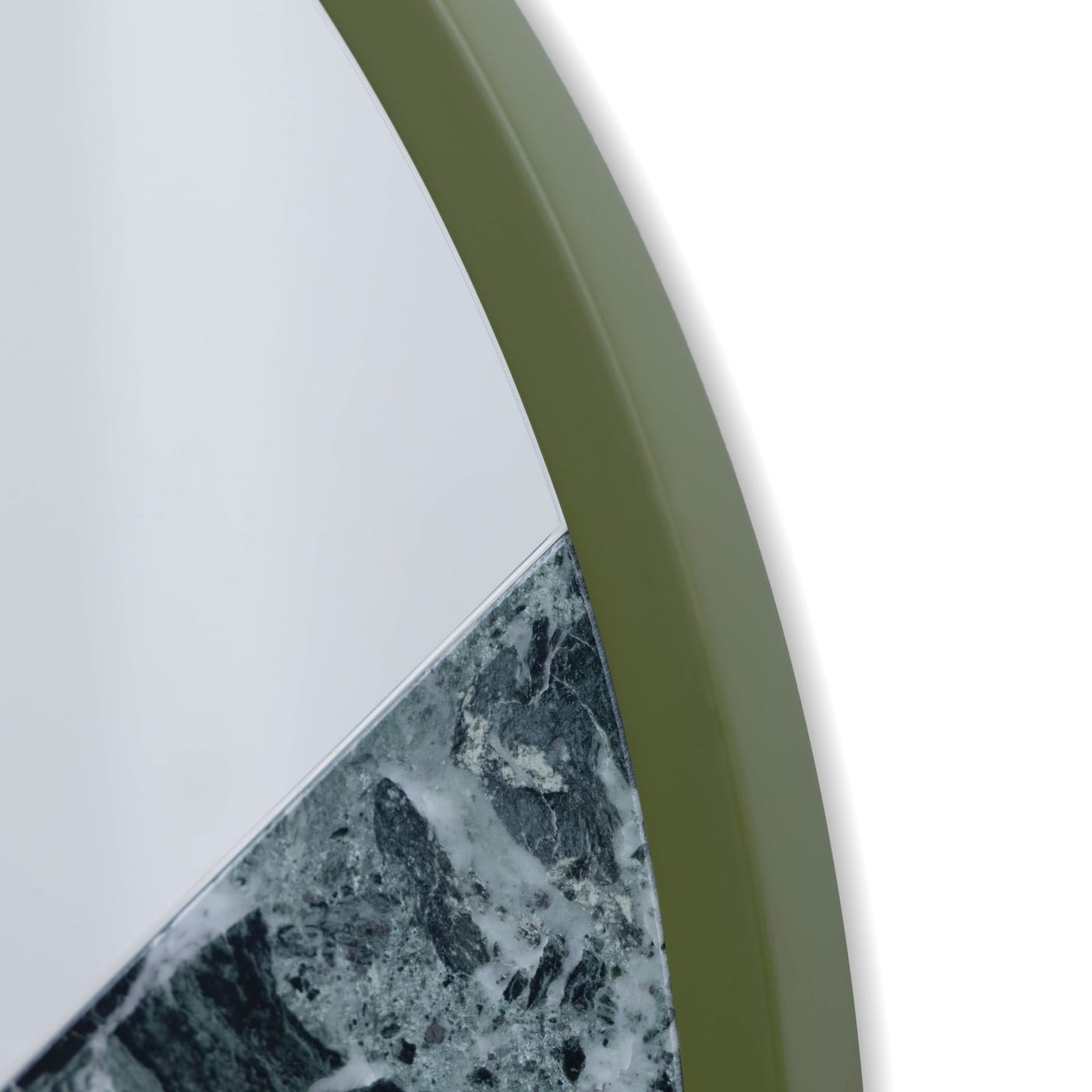
- Eugenio Gelao

- Liri
On the record
Two mirrors, one name.
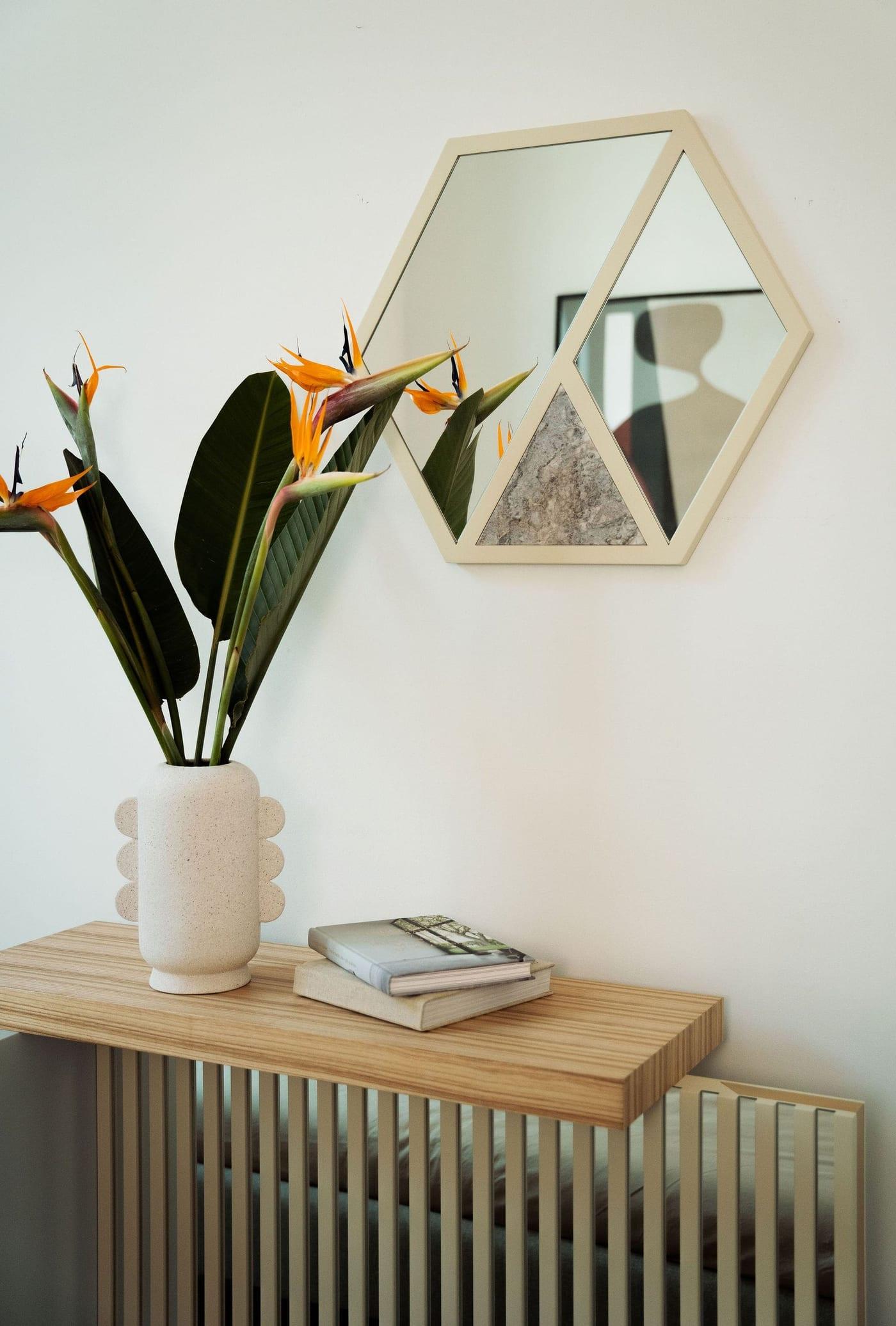
On Lebanto’s own pages the designer field reads Eugenio Gelao for exactly two pieces: Domino and Liri. Both are mirrors.
On the other pages we read, the piece is credited to Lebanto itself. The brand’s About page does not mention him.
What we looked for, and did not find
- An interview with him
- A word of his about the work
- An award
So there is no quote from him here. We would rather leave the space than fill it.
The arcades
Light and shadow, from Turin.
Lebanto’s co-founder Emanuela Terraneo, in an undated interview, says the mirror details of the first collection, developed by Eugenio Gelao, are meant to recall
“the play of light and shadow generated by the columns of Turin’s arcades.”
Our reading, not theirs
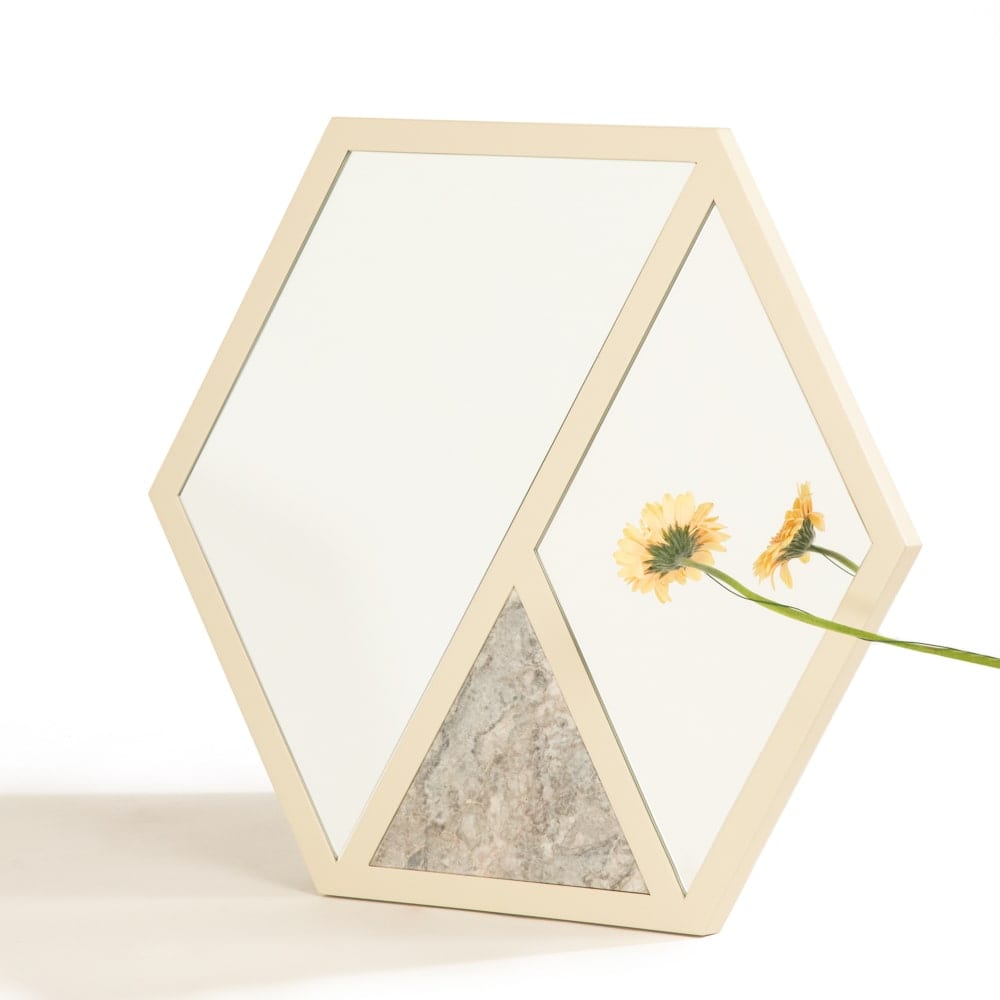
Look at the two mirrors. Glass takes the light. A cut of stone sits across it and keeps the shade. One line decides where the one ends and the other begins.
The pieces
Domino and Liri.
Wood, mirror and Italian marble, made to order in Cantù. Finish and colour can change with the order.
Round · Ø 60 cm, 2.5 cm deep
Domino
A round mirror cut across by a diagonal of marble, held in a wood frame. Lebanto describes it as a fusion of wood and marble, crafted in Italy.
Find it in the shop — Domino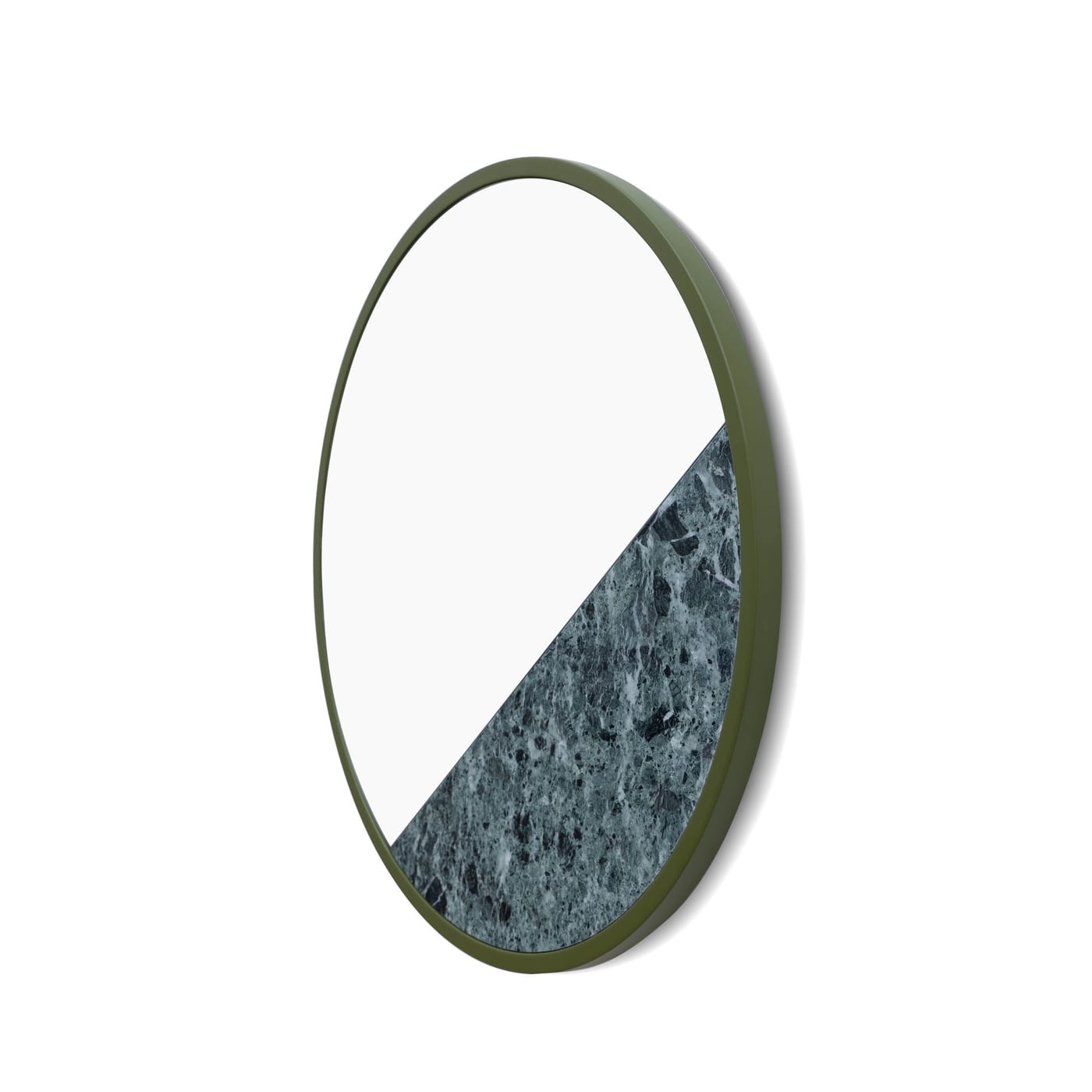
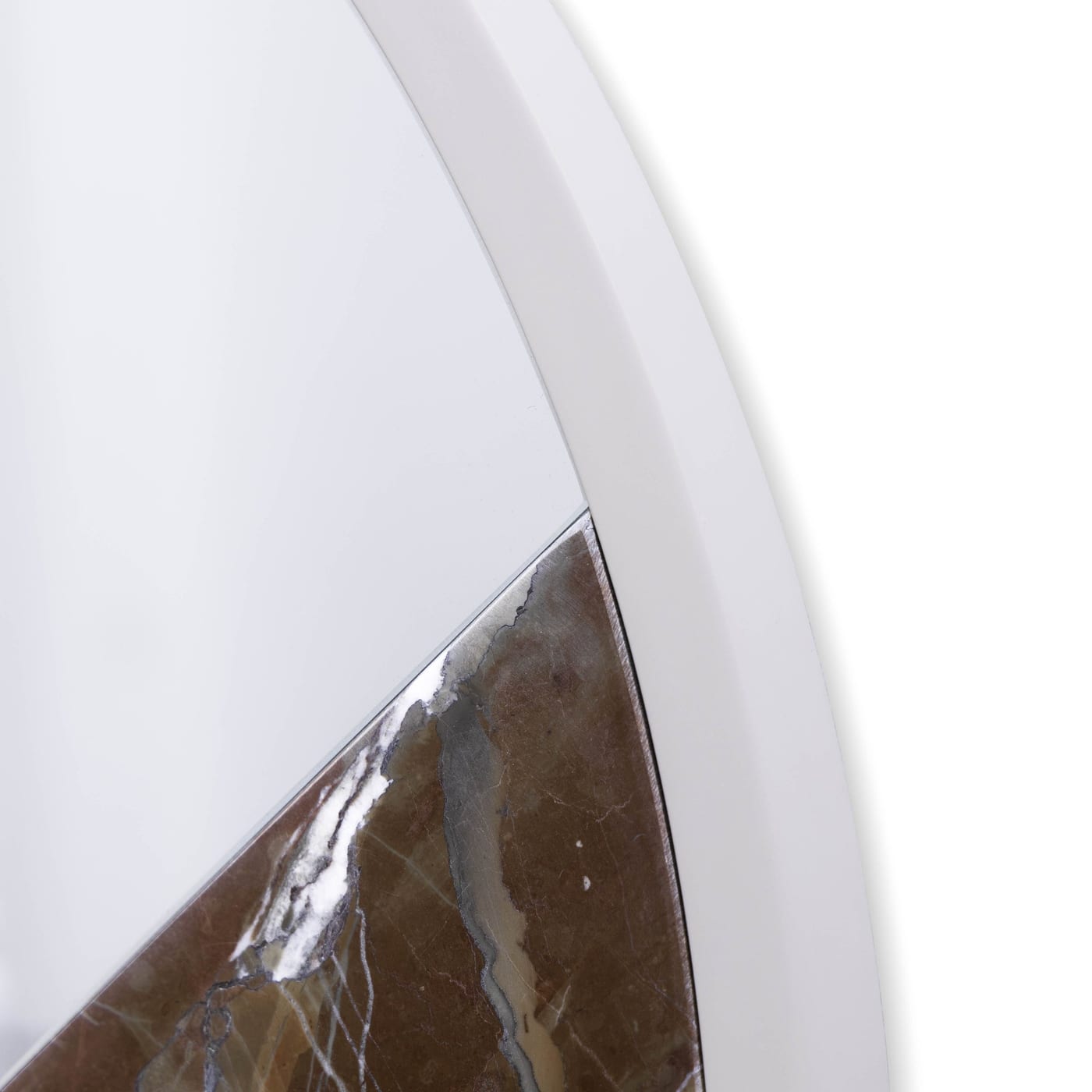
Hexagon · 60 × 60 cm, 2.5 cm deep
Liri
A hexagonal mirror in an ivory-lacquered wood frame, with a triangle of Fior di Pesco marble at its foot.
Find it in the shop — Liri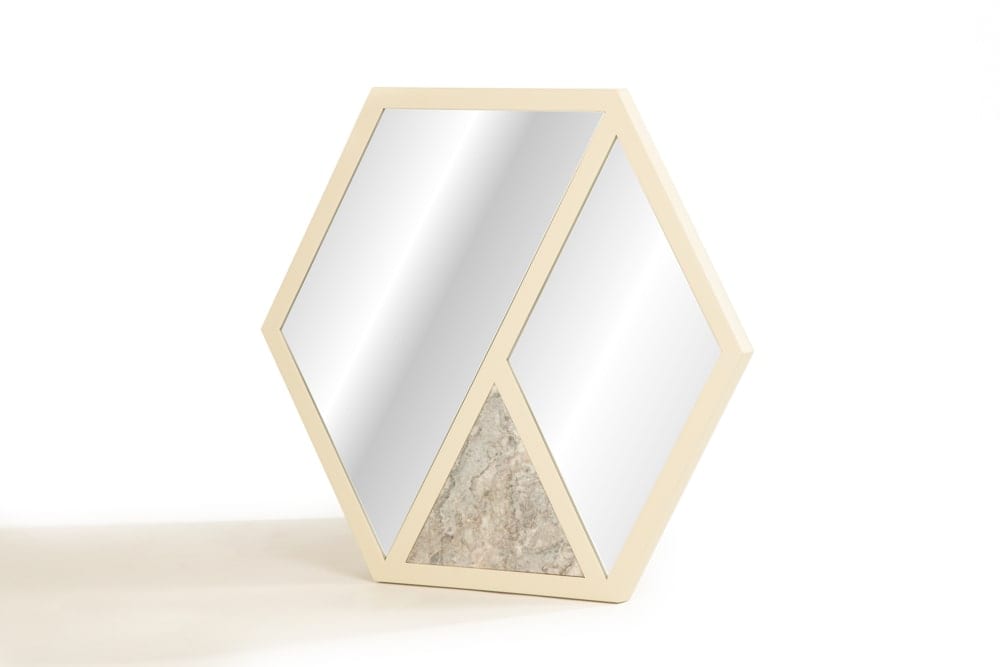
Both are made to order. Ask us what can be had, in which finish.
What he stands for
Two honest mirrors.
This part is ours. It is how we read the two pieces against the MELI Living Standard™.
- 01
Known materials
Liri names its stone, Italian Fior di Pesco marble, and its wood, ivory-lacquered. Domino is wood, mirror and marble. Nothing is left to guess.
- 05
Answerable
Lebanto is rooted in Cantù, between Milan and Lake Como. Every piece is made to order in Italy, and the brand puts a name on the two mirrors.
A MELI line
Some designers are known by a long record. Some by two mirrors. We carry the mirrors, and say which.